
Packaging EPR in 2026: EU, US and Global Regulatory Trends
Packaging regulation is becoming increasingly relevant to supply chain management.
Companies are being asked to understand not only what their packaging costs, but also what materials it contains, how much it weighs, how it is recovered and which regulatory obligations may apply in each market.
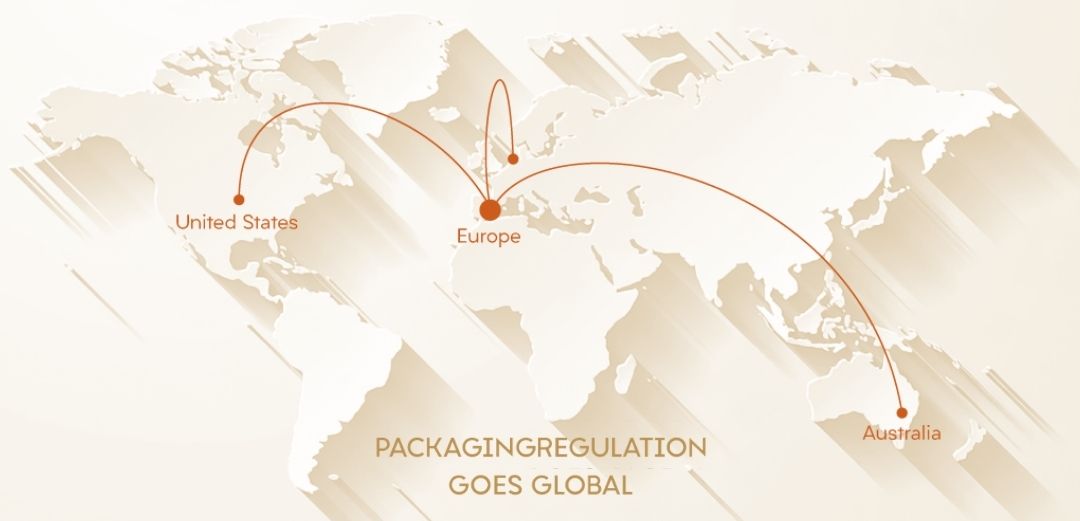
In 2026, three developments illustrate this trend:
- The general application of the European Union’s Packaging and Packaging Waste Regulation —PPWR—.
- The expansion of packaging Extended Producer Responsibility —EPR— laws across several US states.
- The debate around a proposed national packaging EPR framework in Australia.
The rules are not identical and should not be treated as a single global regulatory system.
But they point toward the same strategic direction:
packaging information is becoming supply chain data.
PPWR: the European framework is now applicable
The EU’s Packaging and Packaging Waste Regulation began applying generally across the European Union on 12 August 2026. The Regulation establishes a harmonised framework covering packaging and packaging waste across the Single Market.
However, this does not mean that every requirement associated with the PPWR became mandatory on that date.
Several technical obligations, methodologies and recyclability requirements will be implemented progressively during the coming years.
This distinction is important for companies.
“Applicable from 2026” should not be interpreted as “every 2030 requirement applies today”.
What businesses can do now is begin improving the quality of their packaging information and internal processes.
Packaging compliance increasingly depends on data
Companies need to be able to answer practical questions such as:
- Which packaging formats are we using?
- What does each component weigh?
- What materials are used?
- Which components can be separated?
- Is the packaging reused?
- What happens to it at destination?
- Is an established recovery route available?
- What technical documentation does the supplier provide?
This moves packaging regulation away from being purely a legal issue.
It increasingly connects:
- Procurement.
- Supply chain.
- Logistics.
- Sustainability.
- Finance.
- Compliance.
The pallet can form part of this information landscape.
Packaging EPR is expanding across the United States
The United States does not currently have a single federal packaging EPR system.
Instead, legislation is developing at state level.
As of August 2026, seven states had enacted packaging EPR laws:
- California.
- Colorado.
- Oregon.
- Minnesota.
- Maine.
- Maryland.
- Washington.
These systems are not identical.
Definitions of producers, reporting requirements, exemptions, fee structures and implementation schedules vary between states.
For example, Colorado and Oregon already have producer fees in operation, while other states remain at different stages of reporting and implementation.
For businesses selling packaged products into these markets, the correct question is therefore not:
“Does the United States have packaging EPR?”
but:
“Which obligations apply to our products and packaging in each state?”
Logistics packaging and pallets require careful classification
There is an important regulatory nuance.
It would be inaccurate to state that every pallet automatically falls within every packaging EPR regime.
Depending on the jurisdiction and application, legislation may distinguish between:
- Consumer packaging.
- Commercial packaging.
- Transport packaging.
- Reusable packaging.
- B2B packaging.
- Exempt categories.
Therefore, companies should assess how their specific pallet systems are classified under the relevant rules.
The correct principle is:
logistics packaging, including certain pallet systems, may fall within packaging reporting or producer-responsibility frameworks depending on the jurisdiction and application.
This is why legal and compliance teams should verify the applicable definition rather than relying solely on the material used.
Australia is debating a proposed national EPR scheme
The Australian regulatory situation should also be interpreted carefully.
In May 2026, the Extended Producer Responsibility Scheme for Packaging (No Time to Waste) Bill 2026 was introduced in the Australian Senate.
The bill proposes a national framework requiring producers, importers and distributors to manage packaging across its lifecycle.
As of September 2026, it remains before the Senate and has not become national law.
Therefore, it should be described as:
proposed legislation
rather than:
Australian packaging EPR law.
The distinction matters, especially when producing B2B regulatory content.
What packaging data should companies start collecting?
Regardless of the final regulatory requirements in each market, businesses can reduce future complexity by creating a structured packaging inventory.
For logistics pallets, useful data may include:
|
Data |
Why it matters |
|
Pallet material |
Material classification |
|
Unit weight |
Reporting and transport analysis |
|
Dimensions |
Packaging inventory |
|
Recycled content |
Circularity information |
|
Certifications |
Procurement documentation |
|
Expected use model |
Reuse or one-way classification |
|
End-of-life route |
Recovery assessment |
|
Destination markets |
Regulatory analysis |
|
Technical specifications |
Operational validation |
This type of information makes packaging easier to manage across multiple markets.
How corrugated pallets can simplify packaging information
Corrugated pallets may offer some practical advantages from a data-management perspective.
Their material structure can be relatively straightforward compared with packaging systems combining multiple material types.
For Green Ox, relevant information can include:
- Corrugated-board composition.
- Pallet weight.
- Model specification.
- Load capacity.
- FSC-related documentation where applicable.
- Intended end-of-life pathway.
- Recovery through paper and board recycling streams where available.
This can make it easier to build structured packaging records.
However, a simple material structure does not guarantee regulatory compliance.
Compliance always depends on:
- The relevant jurisdiction.
- The legal definition of producer.
- Packaging classification.
- Product category.
- Market-specific exemptions.
- Reporting rules.
Green Ox can support the technical documentation of the pallet system, but companies should determine their regulatory obligations with their own legal and compliance advisers.
From unit price to total packaging intelligence
Historically, pallet procurement has often focused on:
How much does each pallet cost?
The emerging regulatory environment creates a broader set of questions:
- What does it weigh?
- What is it made from?
- Can it be recovered?
- Does it return?
- Which markets receive it?
- Can we document its specifications?
- How does it affect transport?
- Which regulations may apply?
This changes the purchasing conversation.
The pallet becomes part of a wider total cost and packaging intelligence assessment.
What procurement teams should request from pallet suppliers
Procurement departments can begin adapting by asking suppliers for structured information.
A useful supplier data set includes:
- Material composition.
- Unit weight.
- Dimensions.
- Load specifications.
- Relevant certifications.
- Recycled or renewable material information.
- Expected use model.
- Recommended end-of-life management.
- Technical test information.
- Manufacturing and supply locations.
The more consistent this information is, the easier it becomes to support logistics, sustainability and compliance teams.
Packaging regulation is becoming operational
The regulatory frameworks emerging in Europe, the United States and Australia are different.
They should not be presented as one global law.
But together they demonstrate an important direction of travel:
companies need better visibility over the packaging moving through their supply chains.
For pallets, that means understanding material composition, weight, technical performance, recovery and destination markets.
Green Ox develops high-performance corrugated pallets designed around lower weight, documented specifications and compatibility with established paper and board recovery streams where available.
Contact Green Ox to review your current pallet system and identify which technical and packaging data could support your international logistics strategy.